

Mountains, Rivers and Modern Cities:Ancient Feng Shui for Sustainable UrbanPlanning
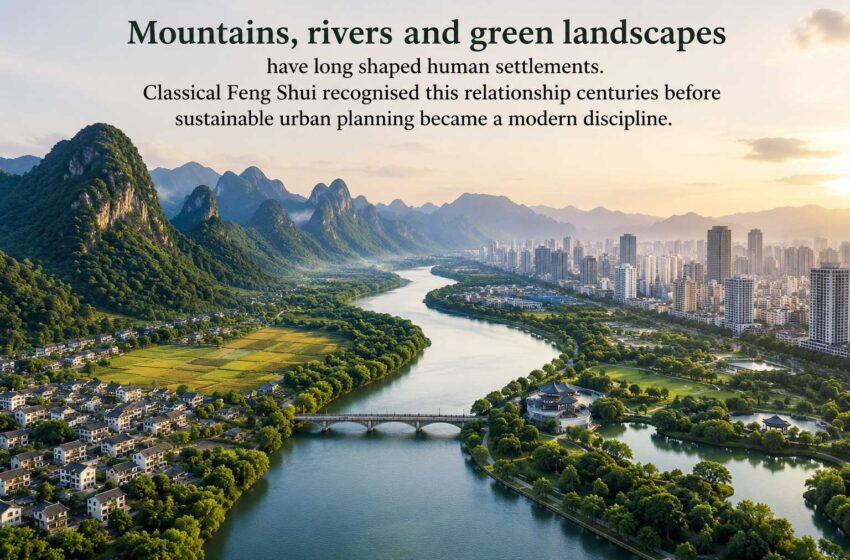
“Qi rides the wind and scatters, but is retained when it encounters water.”
— The Book of Burial (葬書), Guo Pu
For over two thousand years, Classical Chinese Feng Shui has taught that the success of a settlement depends not only on the buildings it contains but also on the mountains that protect it, the rivers that nourish it, and the harmonious relationship between humanity and nature. Today, as cities confront climate change, flooding, urban heat islands and environmental degradation, planners are increasingly embracing green infrastructure, ecological restoration and climate- responsive urban design. Remarkably, many of these modern approaches reflect environmental relationships recognized by Classical Feng Shui centuries ago (Figure 1).
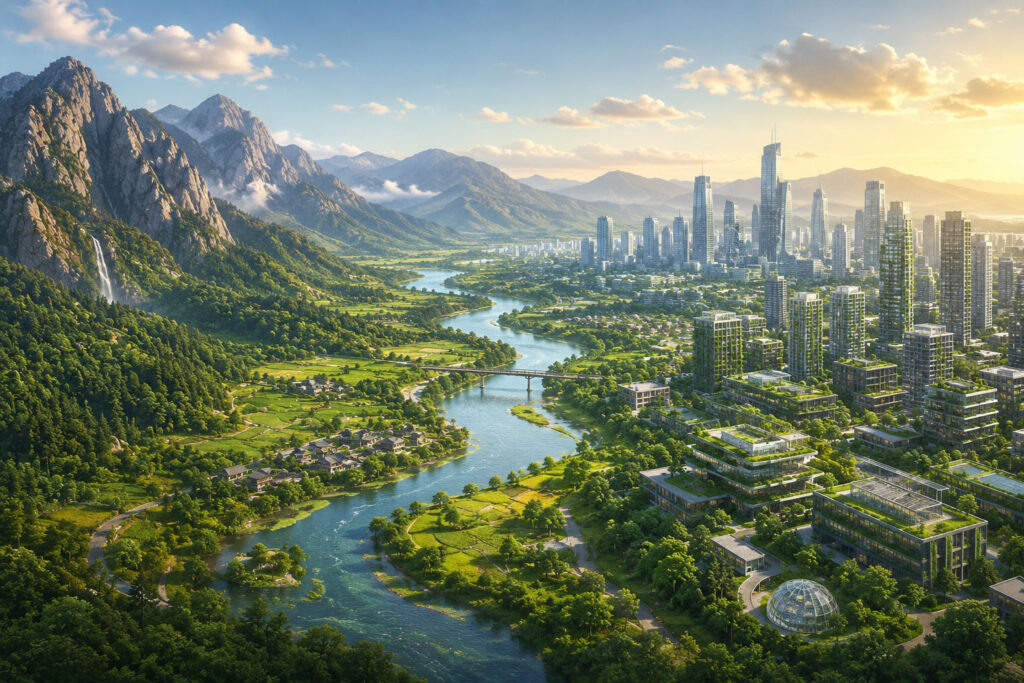
Figure 1. Mountains, rivers and green landscapes have shaped human settlements for centuries. The illustration depicts the transition from natural landscapes to a modern sustainable city, highlighting the continuing relevance of Classical Feng Shui in contemporary urban planning.
Contrary to popular perception, authentic Classical Feng Shui is neither a collection of lucky ornaments nor merely the arrangement of furniture. It is one of the oldest branches of Chinese metaphysics and is fundamentally a study of how the natural environment influences human life.
Ancient Feng Shui masters travelled widely, observing mountain ranges, river systems, valleys, prevailing winds and changing landscapes. Over generations they recognized that certain landforms consistently supported healthier communities, greater prosperity and long-term stability (Figure 2).
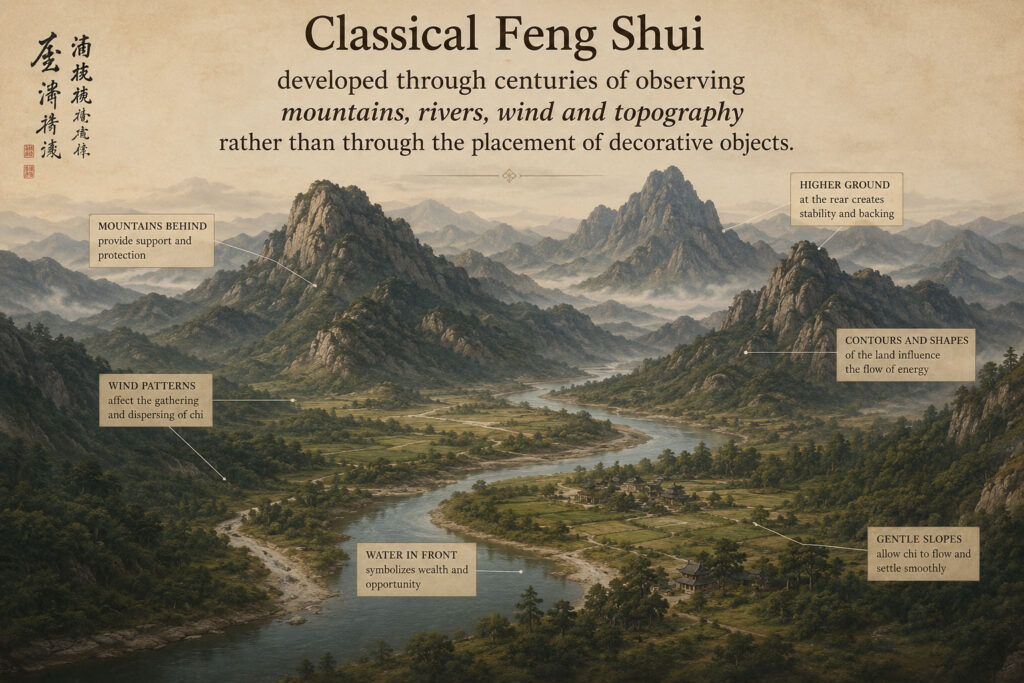
Figure 2. Ancient Feng Shui masters developed their knowledge through careful observation of mountains, rivers, wind patterns and topography.
These observations became the foundation of Form School Feng Shui (形勢派 – Xíngshì Pài). Central to this tradition is the principle 藏風聚氣 (Cáng Fēng Jù Qì)—”Shelter the wind and gather Qi.” Excessive wind disperses Qi, while gently flowing water gathers and nourishes it. This philosophy is expressed through 背山臨水 (Bèi Shān Lín Shuǐ)—”Backed by mountains and facing water”—long regarded as the ideal setting for homes, villages and cities (Figure 3).
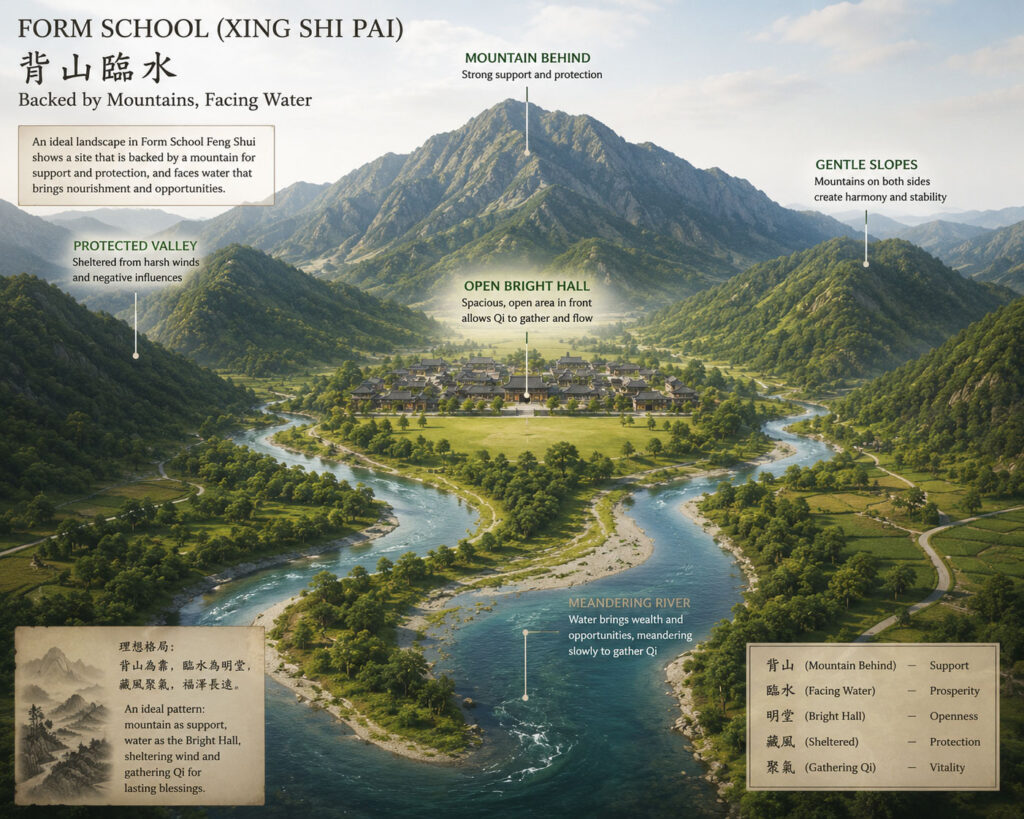
Figure 3. The ideal Form School landscape showing a settlement protected by mountains, overlooking an open Bright Hall and facing gently flowing water.
In Classical Feng Shui, mountains are regarded as the “bones” of the Earth, providing protection, stability and support, while rivers and lakes are its “blood vessels,” carrying life-giving Qi throughout the landscape.
A well-known classical saying expresses this relationship:
山管人丁,水管財
“Mountains govern people; water governs wealth.”
Although expressed in the language of Chinese metaphysics, the underlying observations are remarkably practical. Mountains shelter settlements from harsh winds, create favorable microclimates and provide psychological security. Water sustains agriculture, moderates temperature, supports transport and encourages prosperous communities.
The ideal landscape is further represented by the Four Celestial Animals—the Black Tortoise providing support behind, the Green Dragon protecting the left, the White Tiger balancing the right, and the Vermilion Bird overlooking the open Bright Hall in front. Together they symbolize an environment where Qi gathers naturally and harmoniously (Figures 3A & 4).
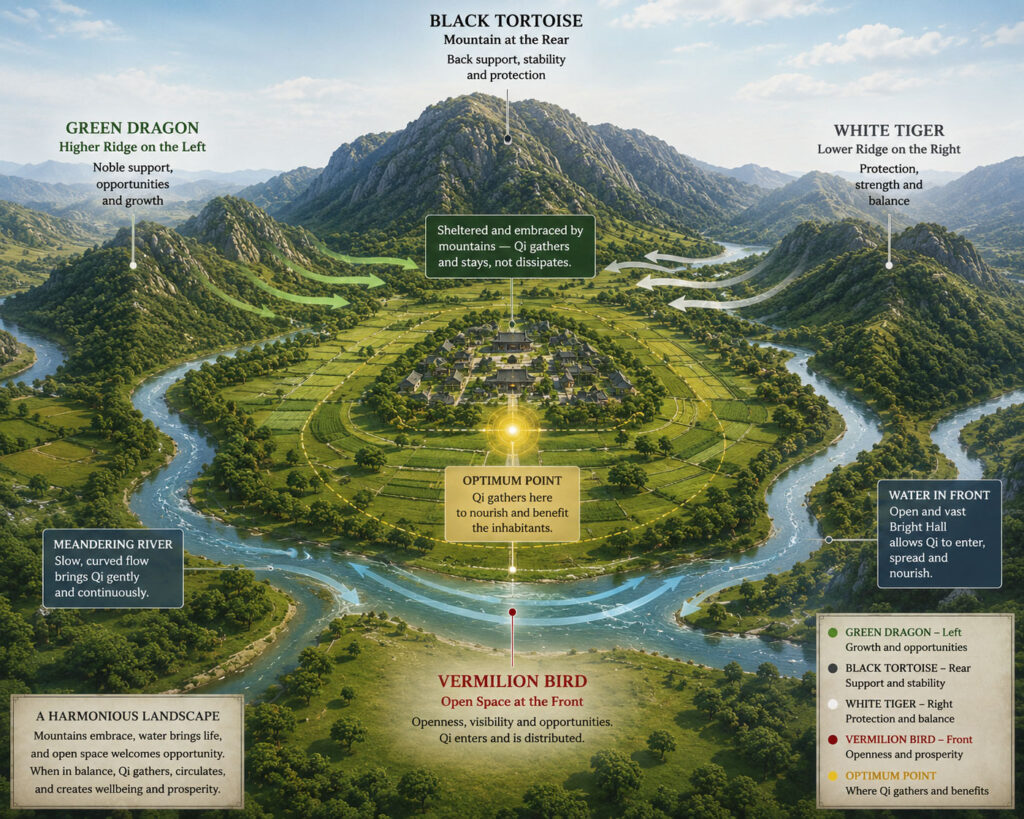
Figure 3A. An ideal settlement positioned at the optimum location where Qi naturally gathers through the relationship between mountains, valley and water.
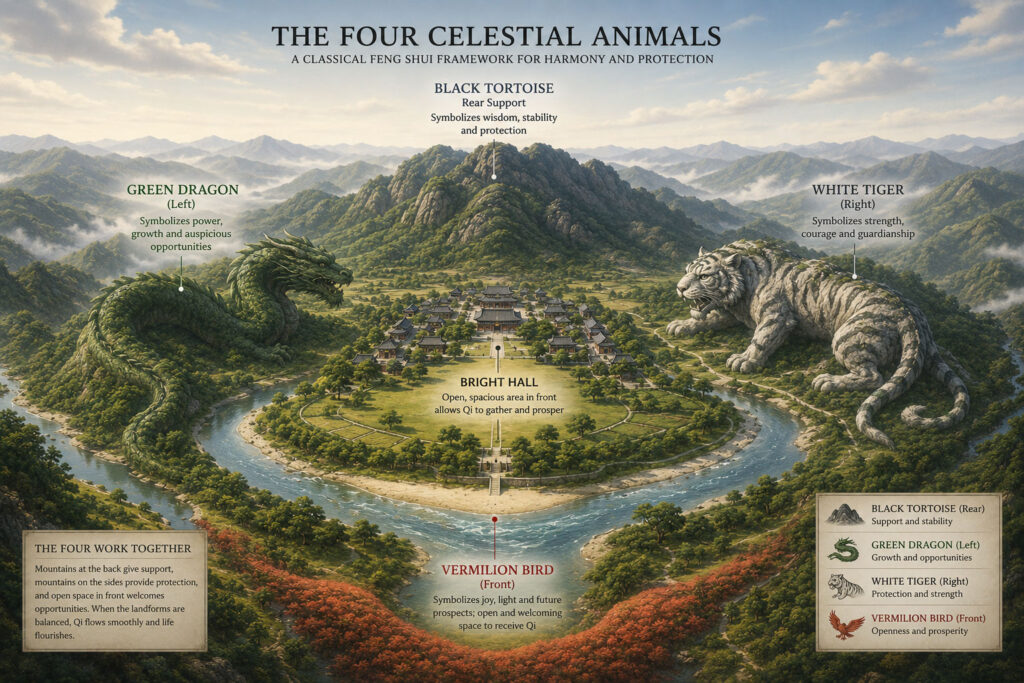
Figure 4. The Four Celestial Animals illustrating the ideal balance of mountains, open space and water in Classical Form School Feng Shui.
Modern urban planners may not consciously use Feng Shui terminology, yet many of today’s most successful planning strategies reflect these timeless environmental principles.
Green belts, urban forests, ecological corridors, parks and vegetated roofs function as contemporary equivalents of protective mountains. Likewise, rivers, lakes, wetlands, restored waterways and retention ponds improve biodiversity, moderate temperatures, reduce flooding and enhance urban resilience. Increasingly, planners also favor natural meandering waterways over rigid concrete channels because they slow runoff, reduce erosion and improve ecological health—closely mirroring Classical Feng Shui’s preference for gently flowing water that gathers rather than disperses Qi.
Similarly, contemporary architects analyze solar access, prevailing winds, shading and natural ventilation to create energy-efficient and comfortable buildings. Although the terminology differs, both disciplines seek harmony between the built environment and natural systems (Figure 5).
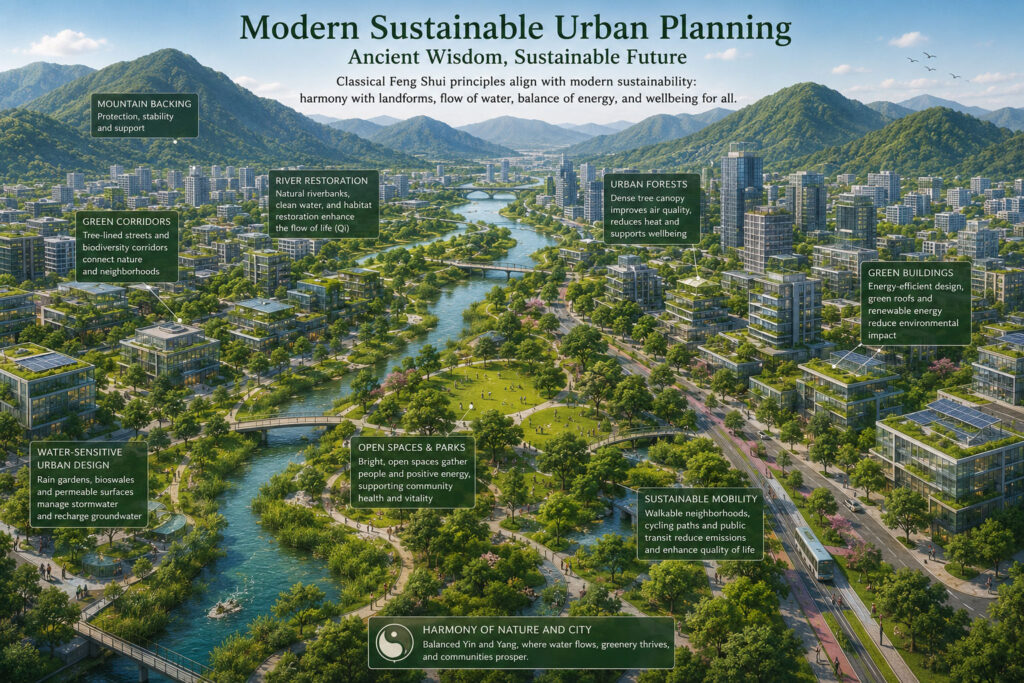
Figure 5. A contemporary eco-city demonstrating green corridors, restored waterways, urban forests, parks and water-sensitive urban design inspired by environmental principles shared with Classical Feng Shui.
Many internationally recognized developments demonstrate these principles in practice.
Singapore’s internationally acclaimed “City in Nature” vision integrates reservoirs, urban forests, ecological corridors and park connectors throughout a dense metropolitan landscape. Sydney’s One Central Park successfully combines high-density living with vertical gardens and innovative environmental technologies. In Macau, numerous developments incorporate landscaped open spaces and carefully designed water features that enhance both environmental comfort and urban live ability (Figure 6).
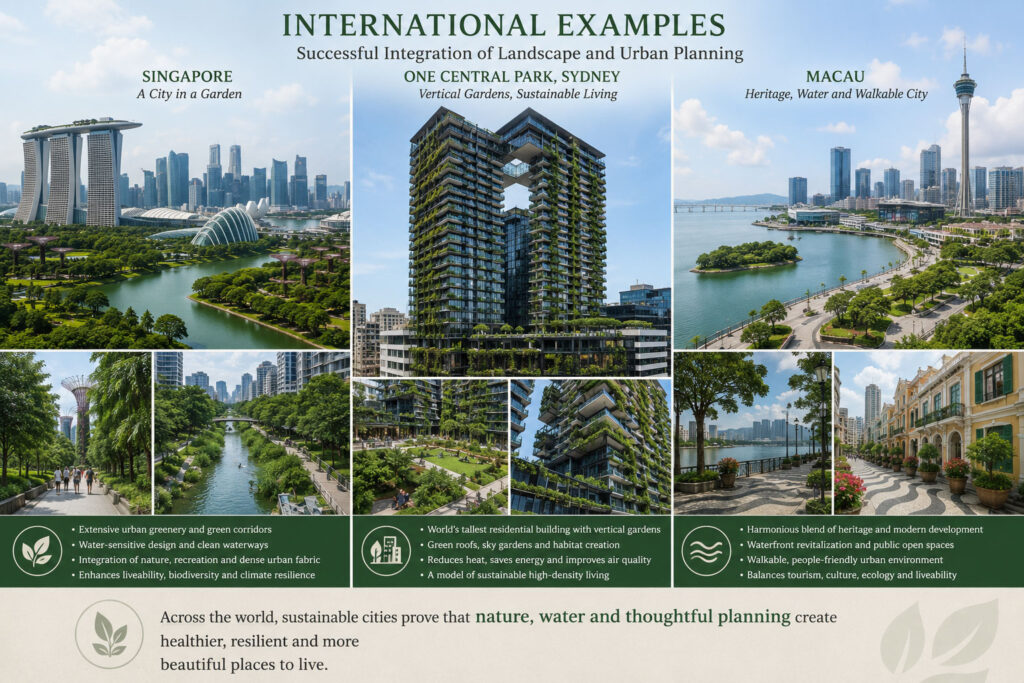
Figure 6. International examples from Singapore, Sydney and Macau illustrating the successful integration of nature, water and urban planning.
India offers equally compelling examples through its own planning traditions. Jaipur’s relationship with the Aravalli Hills, Chandigarh’s connection to the Shivalik Hills and Sukhna Lake, Lavasa’s hillside development, and Gandhinagar’s generous tree cover all demonstrate how successful cities continue to benefit from respecting natural landforms rather than attempting to dominate them (Figure 7).
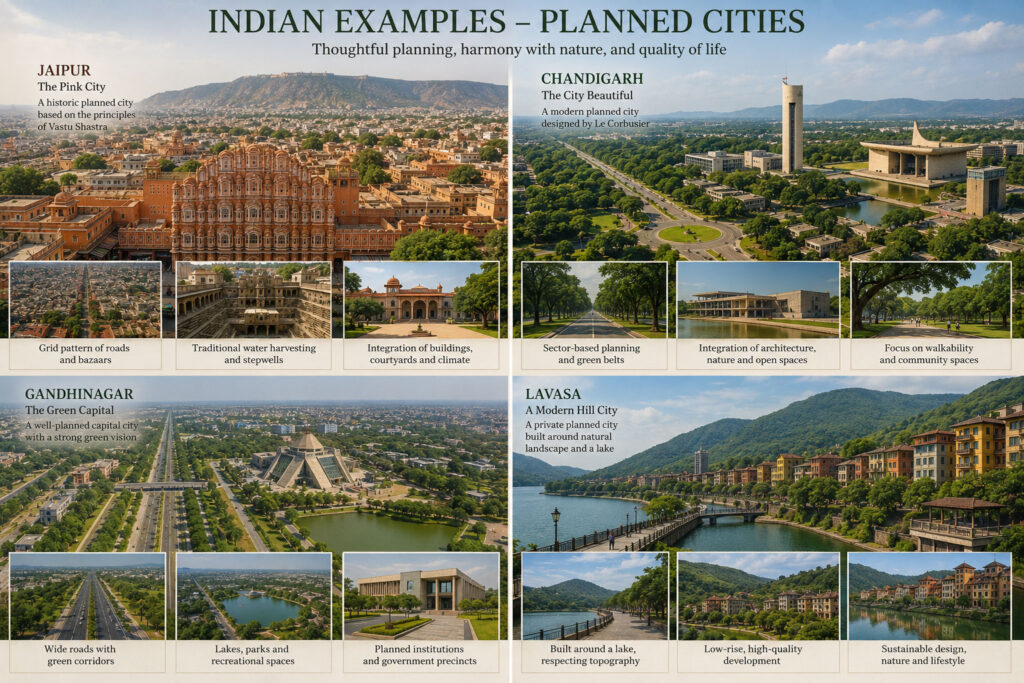
Figure 7. Indian examples—Jaipur, Chandigarh, Gandhinagar and Lavasa—demonstrating climate-responsive planning in harmony with geography and natural landscapes.
As cities continue to expand, planners increasingly recognize that resilient urban environments depend upon working with natural systems rather than against them. Nature-based solutions, blue-green infrastructure and climate-responsive planning all reaffirm the importance of integrating landforms, vegetation and water into urban development.
Classical Feng Shui should neither be regarded as a substitute for science nor dismissed as superstition. Rather, it represents centuries of careful observation of the natural world. Modern disciplines such as urban climatology, landscape ecology and environmental psychology increasingly help explain why many of these environmental observations remain relevant today.
The enduring legacy of Classical Feng Shui lies in its profound respect for nature. Long before sustainability became a global priority, it taught that thriving communities emerge when human settlements work with the landscape rather than against it. Mountains offer protection, water brings vitality, and thoughtful planning creates harmony between people and their environment.
In an age when resilient and sustainable cities have become a global necessity, this ancient wisdom continues to offer valuable insights for planners, architects, policymakers and communities alike (Figure 8).
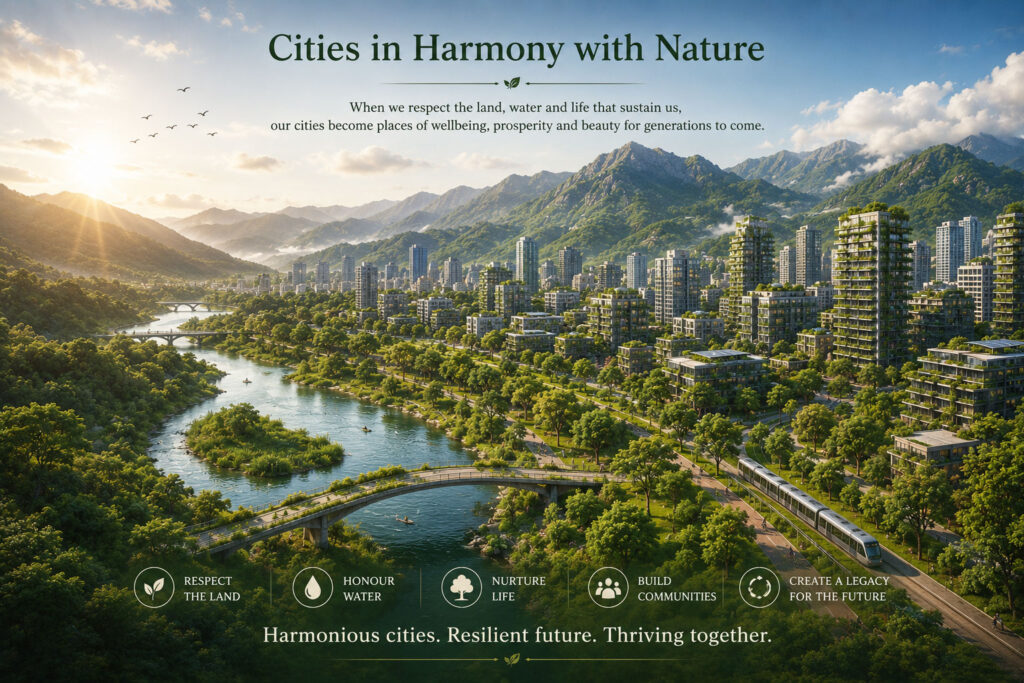
Figure 8. A contemporary city harmoniously integrated with mountains, rivers and forests, illustrating that sustainable urban development succeeds when cities coexist with nature rather than dominate it.
About the Author
S. B. Surendran, BE (EL), AMIE, PG Dip (France), AFSM
Accredited Feng Shui Master of the International Feng Shui Association (IFSA), Professional
Member of the IFS Guild USA, Traditional Vastu Practitioner, Bioenergetician, consultant,
international speaker and columnist. His work explores the intersection of Classical Feng Shui,
Vastu Shastra, bioenergetics and contemporary environmental design.